For furniture, kitchen and interiors brands, imagery sells. Customers need to see how a staircase, a kitchen or a fitted wardrobe will look in a real home before they buy. Traditionally that means building a room set, dressing it, lighting it and photographing every product in every finish. Interior 3D renders do the same job without the build.
We’ve created photoreal CGI for brands including Neville Johnson and Tom Howley, and the same benefits come up on every project:
The best interior CGI doesn’t just show a product. It places it in a room people want to live in.
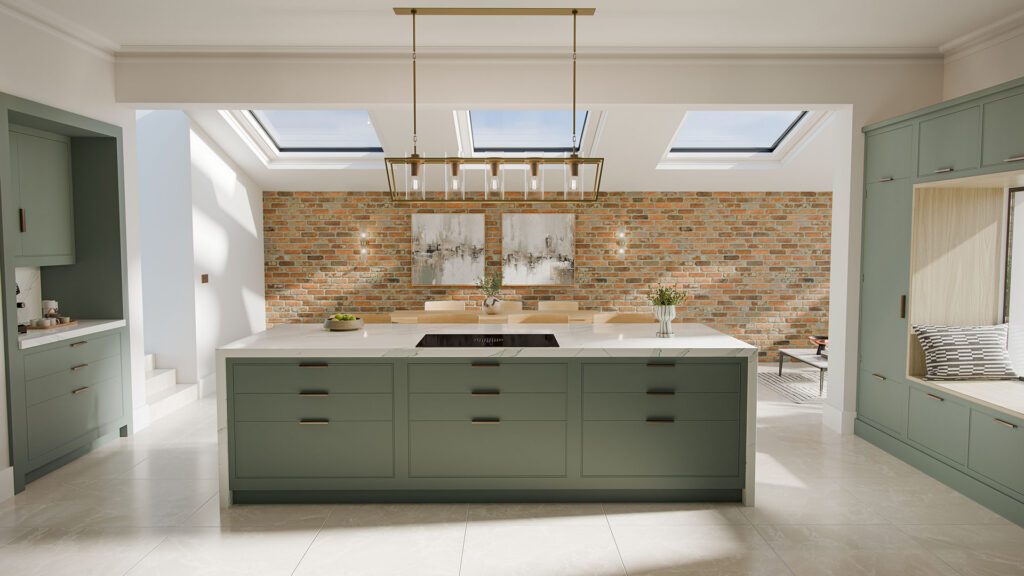
For Tom Howley’s Malone kitchen, no physical set was built. We modelled the whole space from scratch: the flat architectural doors and burnished brass edge-pull handles, the props in the pantry and even the garden beyond the window. Natural light floods the room to show off the finish and detailing, and the kitchen was visualised in more than one colourway.
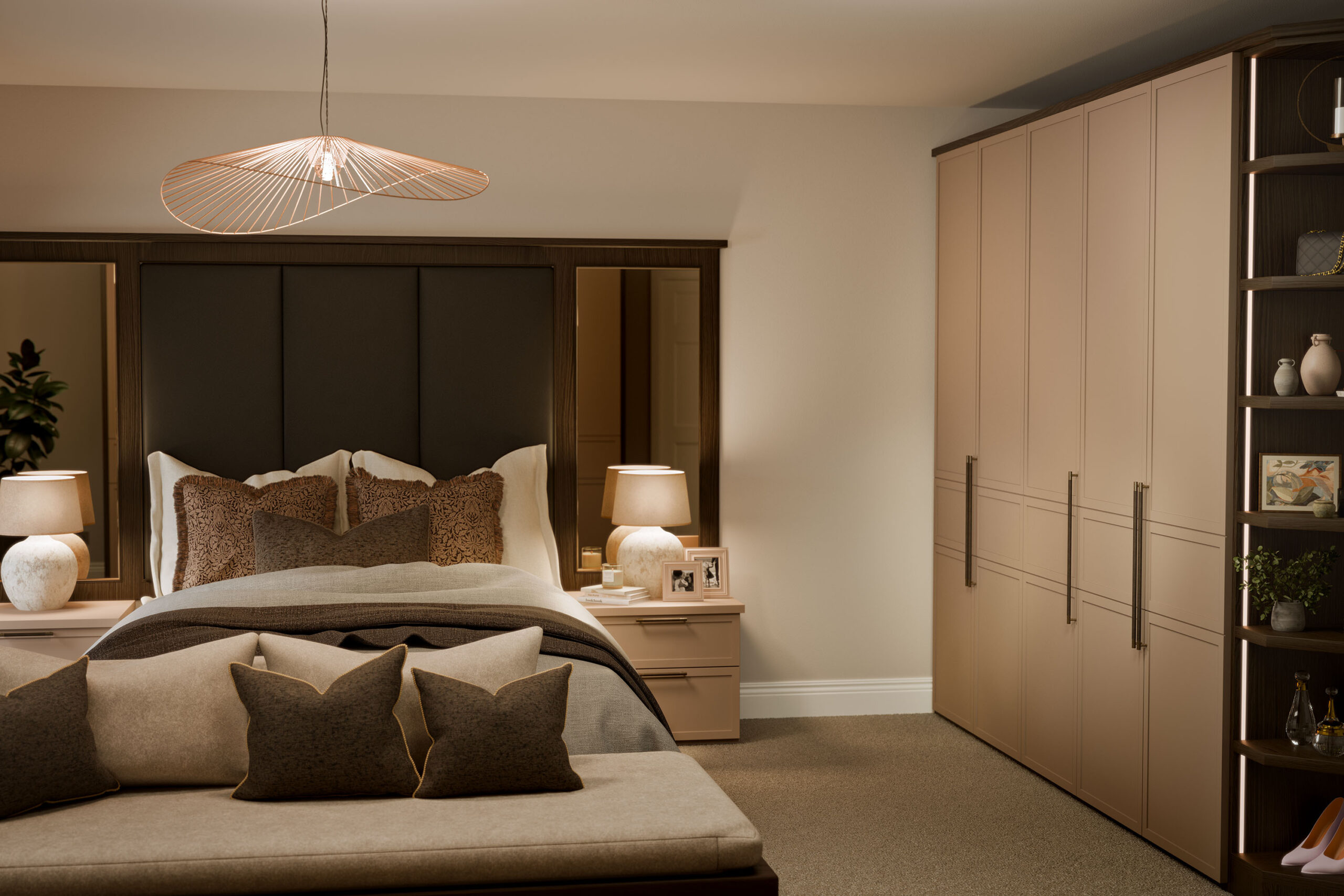
For Neville Johnson’s contemporary bedroom, we used fabric simulations for the bedding and cushions, matched materials to real samples and built precise wood grain textures, so the fitted furniture looks exactly as it would in a customer’s home.
Every project follows the same process, built around the way a photographer would approach a real shoot. If you need a CGI film rather than stills, you can follow one stage by stage on our how we work page.
1. Brief and references. We start with your product, your customers and where the images will be used, then gather technical drawings, CAD files, dimensions and material samples.
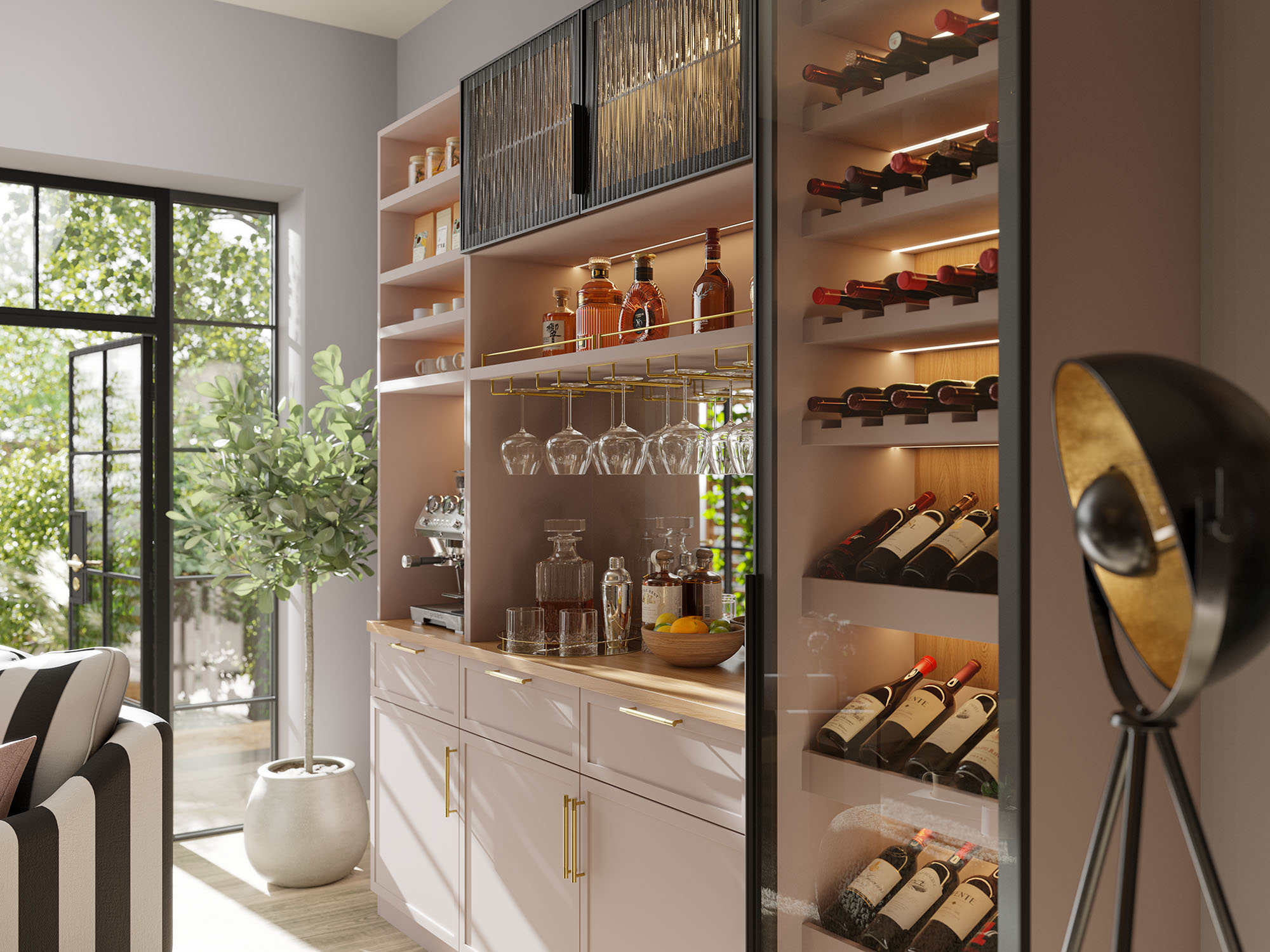
2. 3D modelling. Each product is modelled to its exact dimensions, from the spindles of a staircase to the handles of a cabinet. For the luxury home bar, that meant recreating the Taranto glass doors, Ashbury cabinetry and mirrored back panels down to the last detail.
3. Materials and textures. Wood grain, painted finishes, brass, glass and fabric are matched to real samples, so the finish customers see online is the finish they receive.
4. Set design and styling. We design the room around the product, choosing the architecture, flooring, props and view outside to suit your brand and your customers.
5. Lighting and cameras. Light makes or breaks an interior. We light every scene the way our cinematographers would light a real room, with sunlight, window light and practical lamps, then choose lenses and angles that flatter the space.
6. Rendering and finishing. Final images are rendered at high resolution, then graded and finished. Colourways are rendered from the same cameras, so the whole range stays consistent.
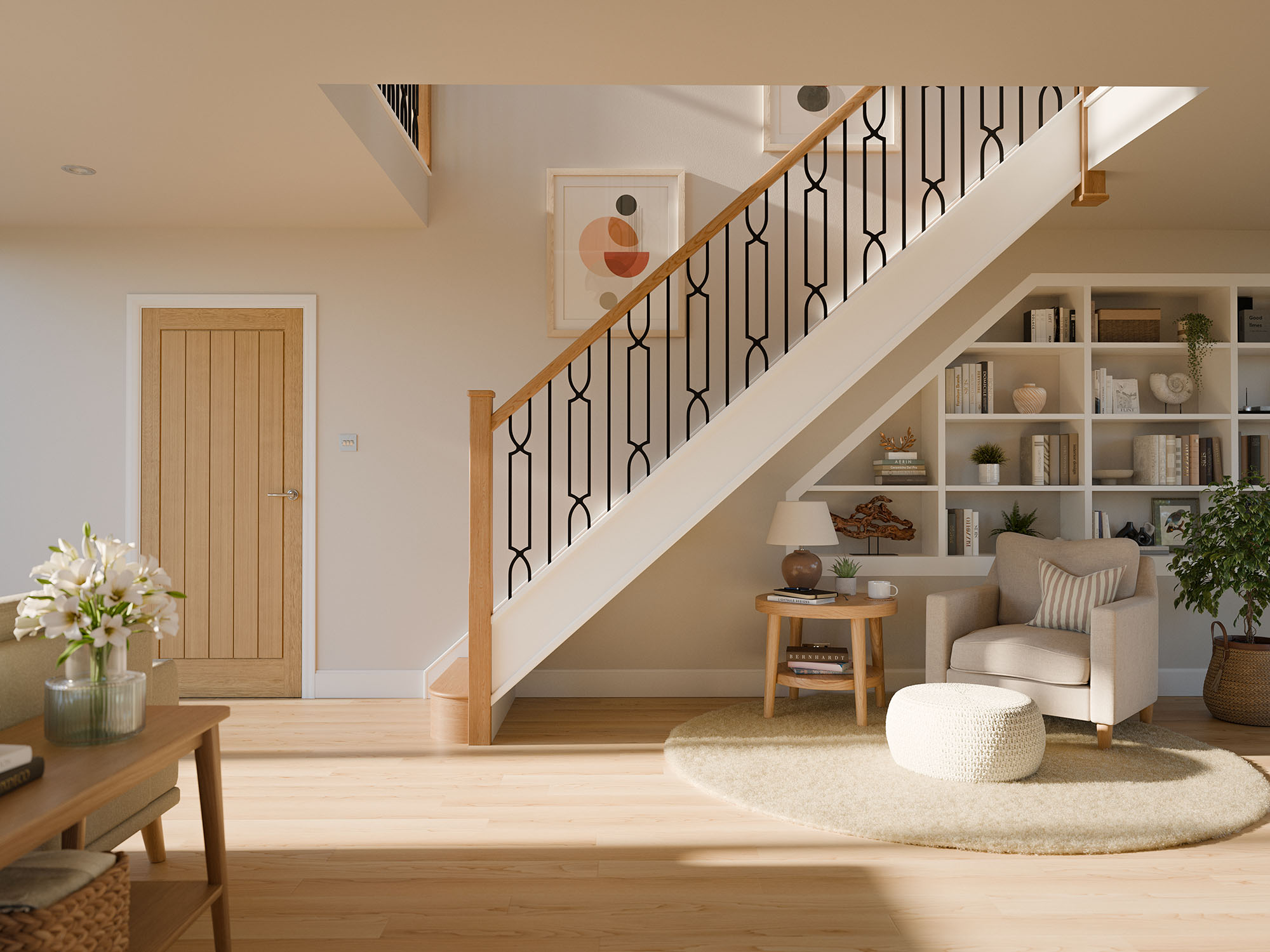
Because everything already exists in 3D, one project can deliver far more than a set of stills. For the Lumiere staircase and the luxury home bar, we produced a full suite of stills and video from the same scenes: camera moves through the room, close-ups of the details and reveals of each finish.
3D assets can go further still, into interactive product configurators, social content and TV. Neville Johnson’s Channel 4 TV advert blended CGI with live action, with every room designed and measured in 3D before a camera rolled.
For Neville Johnson’s Sunny Stairs, we built a sunlit hallway that shows the oak and glass staircase at its best, and rendered it in alternative finishes so customers can compare options side by side.

Work with us
Need CGI renders for your furniture or interiors?
We create photoreal interior 3D renders, room sets and animation for furniture, kitchen and interiors brands. Explore our CGI and 3D animation, or tell us about your range.
Start your projectMore behind-the-scenes stories from the Defy Studios team. Explore more of our blog below.

We use cookies to understand how people use our site so we can keep improving it. Choose "Accept" to allow analytics, or "Decline" to keep things essential only. You can change your mind at any time.